Never Forgotten: Honoring the "Warriors 11" on POW/MIA Recognition Day
This morning, atop the coastal peak of La Jolla, eleven names were etched into history.
In partnership with the USS Midway Museum, Mt. Soledad National Veterans Memorial hosted a special commemorative ceremony on National POW/MIA Recognition Day — unveiling a dedicated plaque honoring the USS Midway's "Warriors 11": eleven Naval Aviators who flew combat missions from the aircraft carrier USS Midway (CV-41) during the Vietnam War and were held as Prisoners of War.
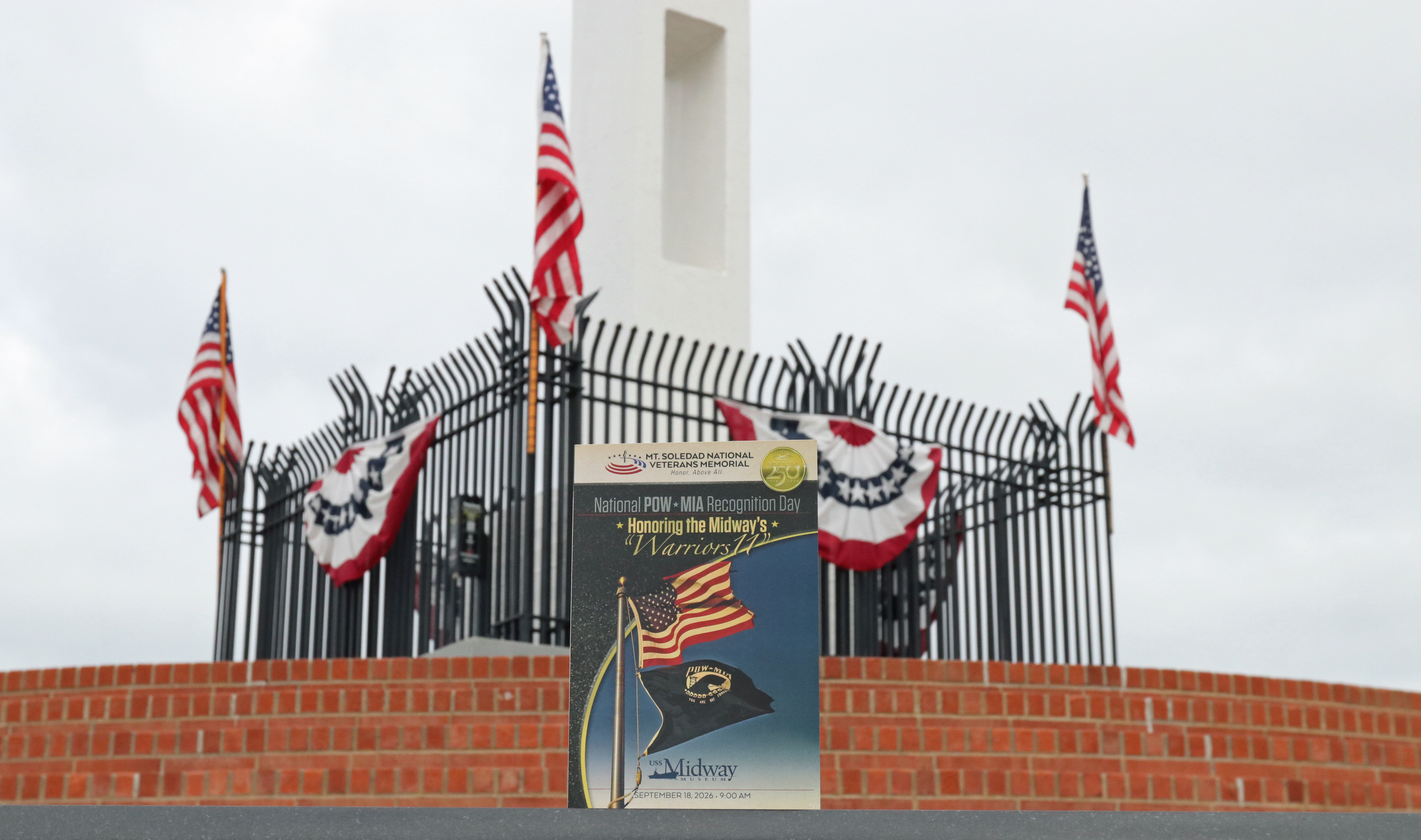
Their stories are extraordinary. Their resilience is humbling. And as our nation marks 250 years of American freedom, their sacrifice is a reminder of what that freedom has truly cost.
What Is National POW/MIA Recognition Day — and Why Does It Matter?
National POW/MIA Recognition Day is observed every year on the third Friday of September. It is one of only six days authorized by Congress on which the POW/MIA flag — black and white, bearing the silhouette of a bowed prisoner and a guard tower — must be flown over federal buildings, including the White House, the U.S. Capitol, and veterans memorials across the country.
But the day is far more than a flag on a flagpole. It is a national promise.
The origins of POW/MIA Recognition Day trace back to the Vietnam War era — a period of profound national division in which thousands of American service members were captured, held in brutal conditions, and in many cases, never accounted for. Families waited years, then decades, for answers that too often never came. Their grief was compounded by uncertainty — not knowing whether their loved one was alive or dead, imprisoned or lost forever.
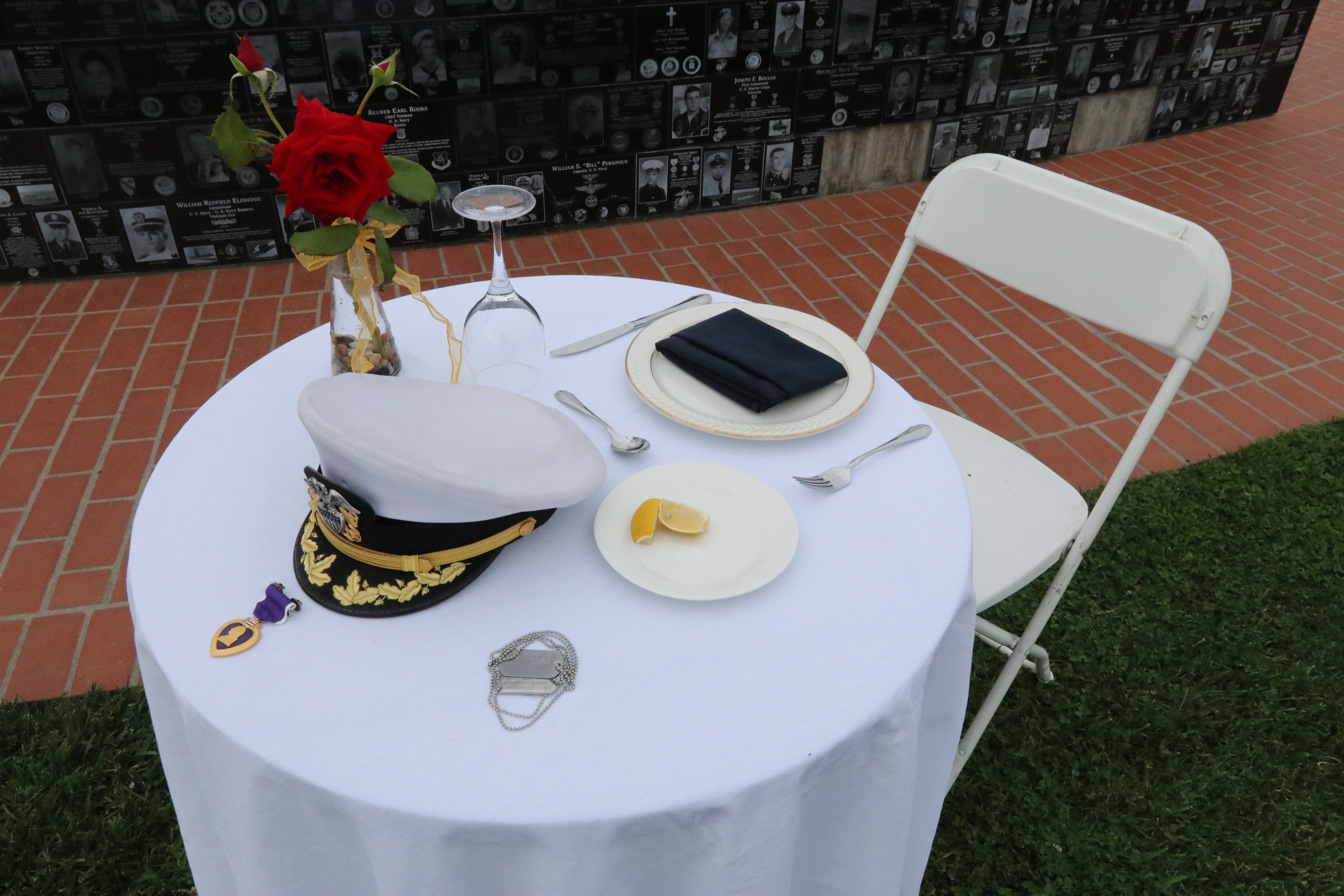
In 1979, the National League of POW/MIA Families — an organization founded by the wives, mothers, and children of missing service members — pushed to establish a national day of recognition. Their advocacy gave rise to what we observe today.
In 1998, Congress formally designated the third Friday of September as National POW/MIA Recognition Day, cementing into law what families had been demanding for decades: that America would not move on. That no service member would be written off as an acceptable loss. That the full accounting of every man and woman who served would remain a national priority — not just a wartime obligation, but a permanent covenant between a nation and those who defend it.
The Numbers Behind the Promise
More than 81,500 Americans remain unaccounted for from conflicts dating back to World War II. That includes:
Over 72,000 from World War II
More than 7,500 from the Korean War
Nearly 1,600 from the Vietnam War
Dozens from the Cold War and other conflicts
These are not abstract figures. They are sons and daughters. Husbands and wives. Fathers who never came home to their children. Mothers whose families never had the chance to say goodbye.
POW/MIA Recognition Day exists to remind us — and our government — that the search for these service members must never stop. It is a day to honor those who were captured and endured unimaginable conditions in enemy hands. It is a day to stand with the families still waiting. And it is a day to recommit to the motto that has guided this cause for more than half a century:
"You Are Not Forgotten."
The POW/MIA Flag — A Symbol With a Story
The POW/MIA flag is one of the most recognizable symbols in American military culture. Designed in 1971 by Newt Heisley, whose own son had been held as a POW in Vietnam, the flag was created as a visual demand — a daily reminder that the issue of missing service members would not be swept aside.
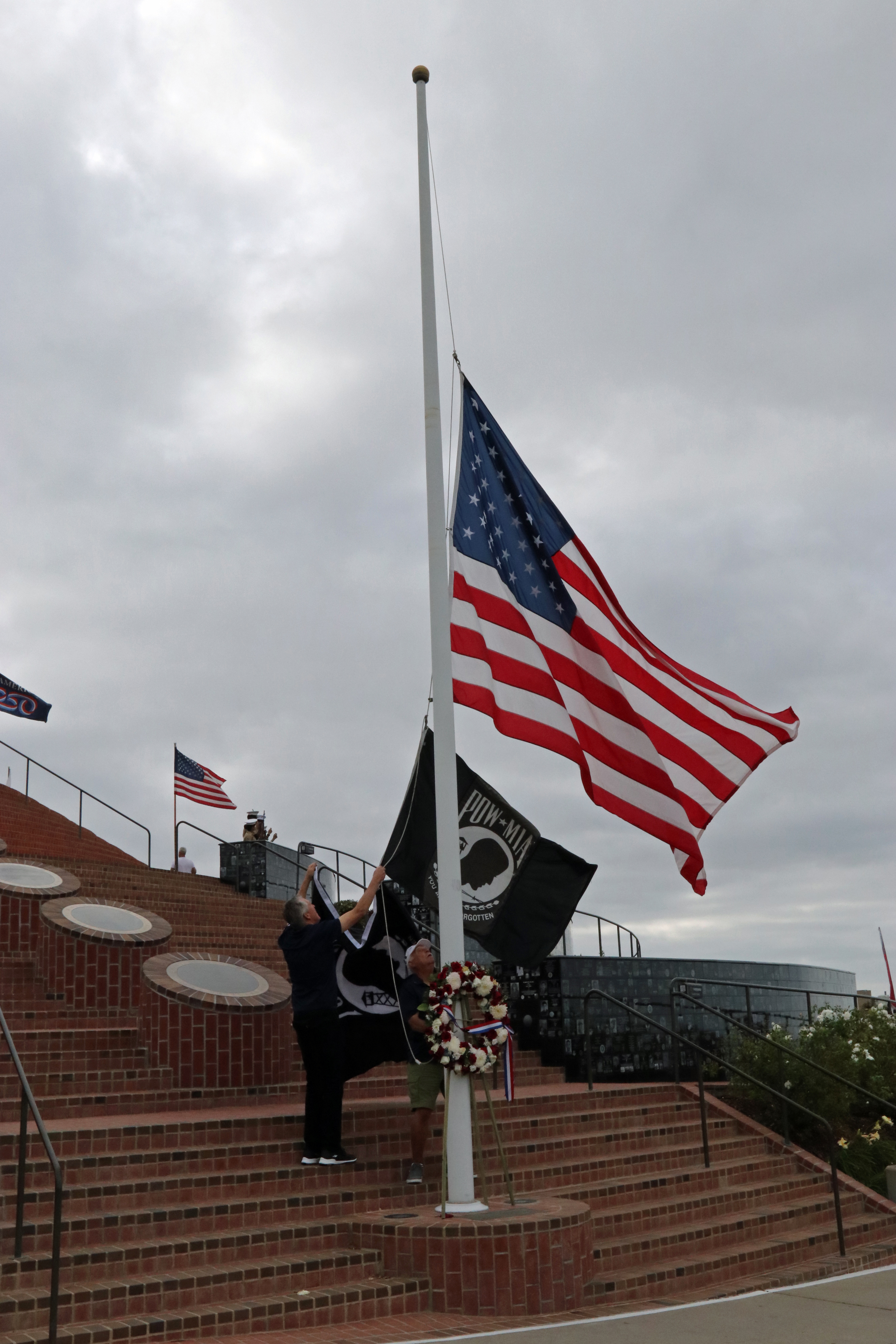
Today it flies alongside the American flag at federal buildings, state capitols, post offices, veterans memorials, and military installations across the country on designated days — including today. It is a symbol not of defeat, but of determination. Not of loss, but of loyalty.
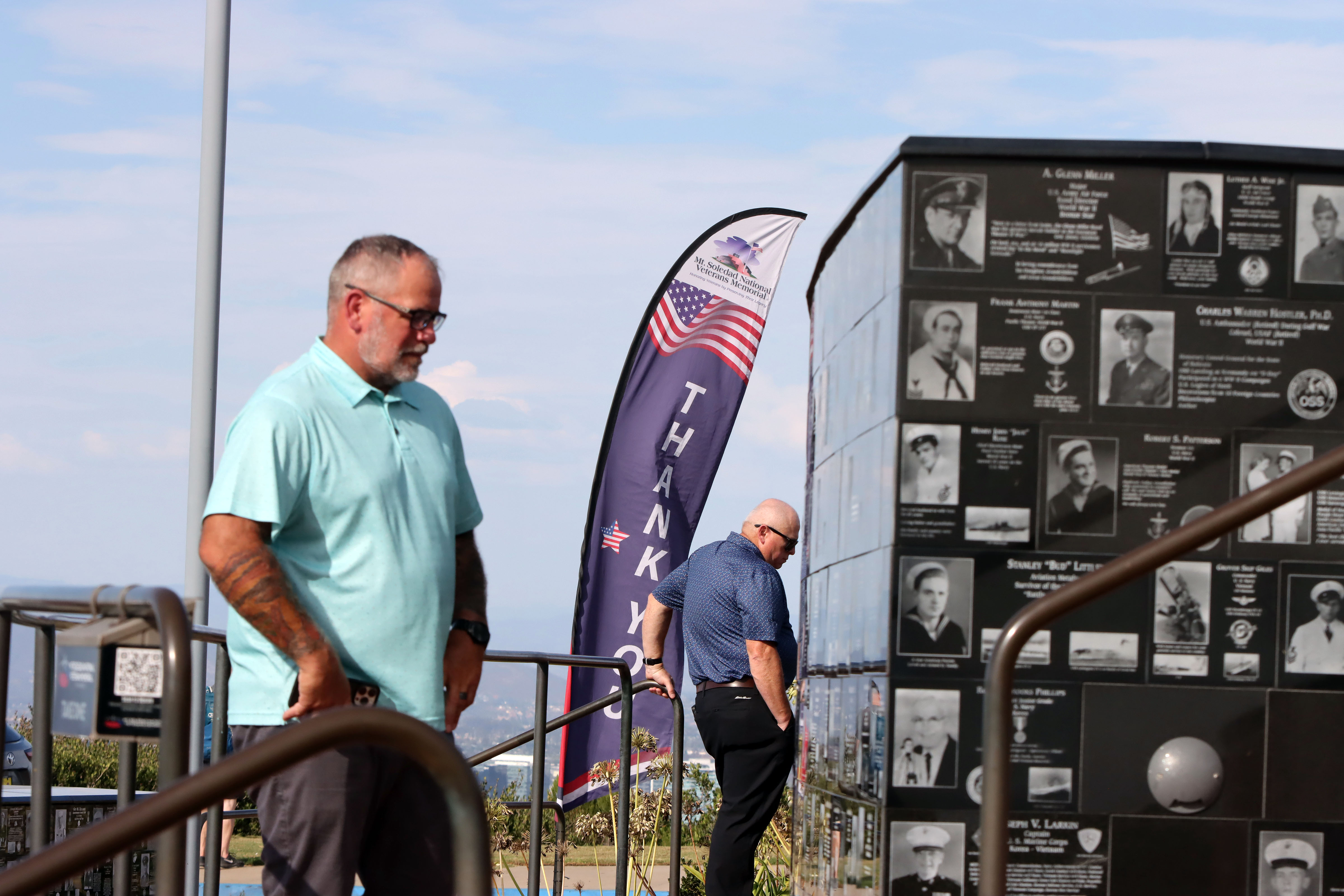
At Mt. Soledad National Veterans Memorial, that loyalty is expressed in stone. In the nearly 7,700 plaques that line our walls. In the names of POWs and MIAs whose stories are preserved here. And in ceremonies like the one we held this morning.
Who Were the Warriors 11?
They flew A-4 Skyhawks, F-4 Phantoms, A-7 Corsairs, and RF-8 Crusaders off the decks of the USS Midway into the skies over Vietnam. They were shot down — by surface-to-air missiles, anti-aircraft fire, and enemy action — and taken captive. Some were originally listed as Killed in Action. Others as Missing in Action. All of them endured years, and in some cases nearly a decade, in captivity.
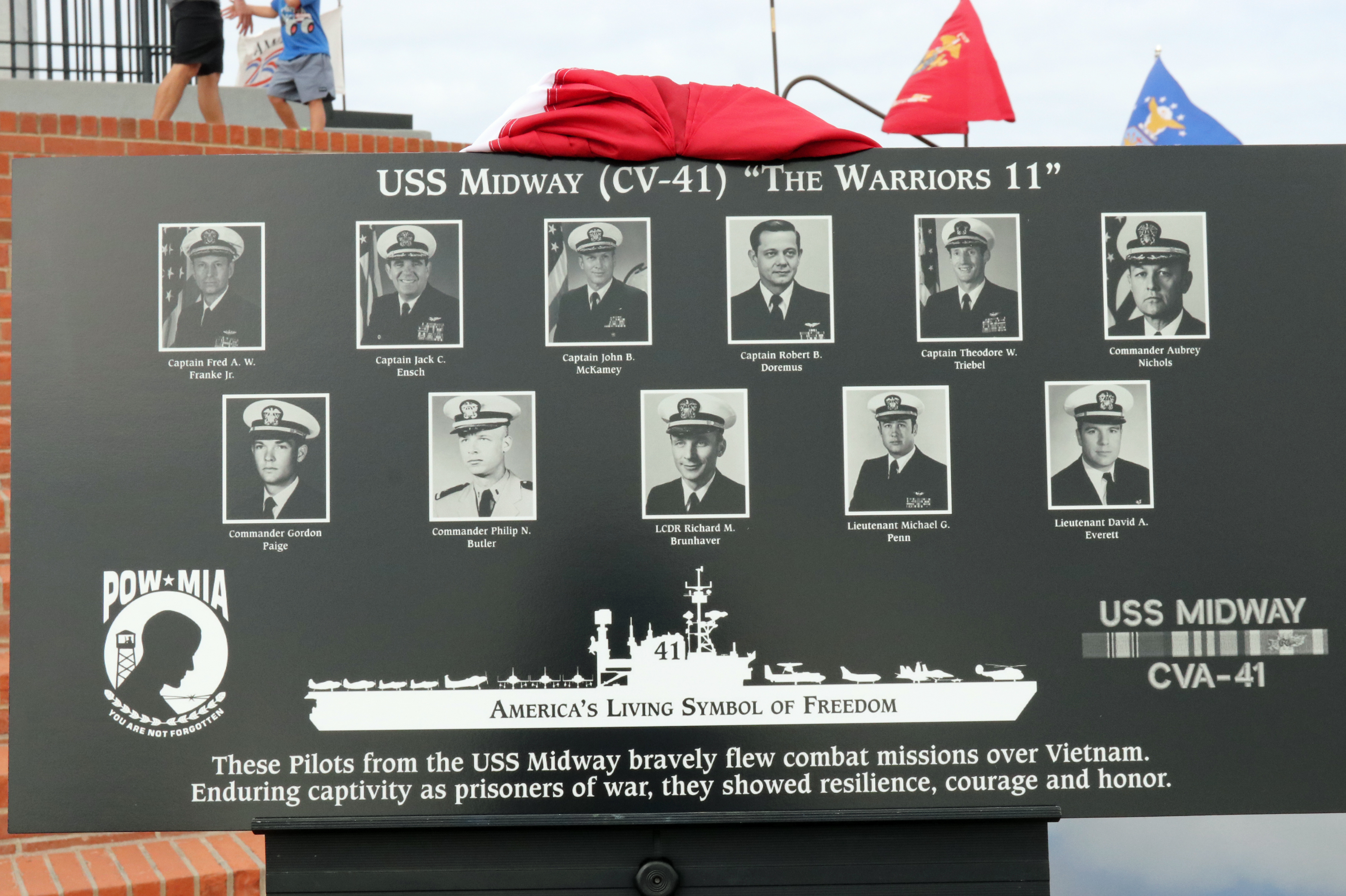
Together, the Warriors 11 accumulated an almost unimaginable combined total of days as Prisoners of War:
CDR Phillip N. Butler — 2,855 days in captivity. Shot down on April 20, 1965, flying an A-4C Skyhawk on a night bombing attack. Captured after evading the enemy for four days.
CAPT John B. McKamey — 2,813 days in captivity. Shot down on June 2, 1965, flying an A-4E Skyhawk on a low-altitude reconnaissance mission.
CAPT Fred A. W. Franke, Jr. — 2,730 days in captivity. Shot down by a surface-to-air missile on August 24, 1965, flying an F-4B Phantom. Originally listed as Killed in Action for nearly two years.
CAPT Robert B. Doremus — 2,730 days in captivity. Shot down the same day as Cmdr. Franke, serving as his Radar Intercept Officer. Also originally listed as Killed in Action for nearly two years.
LCDR Richard M. Brunhaver — 2,729 days in captivity. Shot down on August 24, 1965, flying an A-4C Skyhawk while attacking a bridge. Originally listed as Missing in Action until July 1966.
CDR Aubrey Nichols — 314 days in captivity. Shot down on May 19, 1972, flying an A-7 Corsair II while attacking an anti-aircraft site.
CDR Gordon Paige — 251 days in captivity. Shot down on May 22, 1972, flying an RF-8G Crusader on a reconnaissance mission. Originally listed as Missing in Action.
LT Michael J. Penn — 236 days in captivity. Shot down on August 6, 1972, flying an A-7B Corsair II over North Vietnam.
CAPT Jack C. Ensch — 216 days in captivity. Shot down on August 25, 1972, serving as Radar Intercept Officer in an F-4 Phantom. Severely injured upon ejection.
CAPT Theodore W. Triebel — 215 days in captivity. Shot down by a surface-to-air missile on August 27, 1972, flying an F-4 Phantom on a reconnaissance mission.
LT David A. Everett — 215 days in captivity. Shot down the same day as CAPT Triebel, serving as his Radar Intercept Officer.
Each of these men endured captivity with unyielding strength, faith, and devotion to duty. None of them broke. All of them came home.
Etched in Stone. Remembered Forever.
Today's plaque dedication ensures that their bravery is permanently preserved at Mt. Soledad National Veterans Memorial — one of the most visited military monuments in the United States and the only national memorial that honors both living and deceased veterans across every era of American conflict.
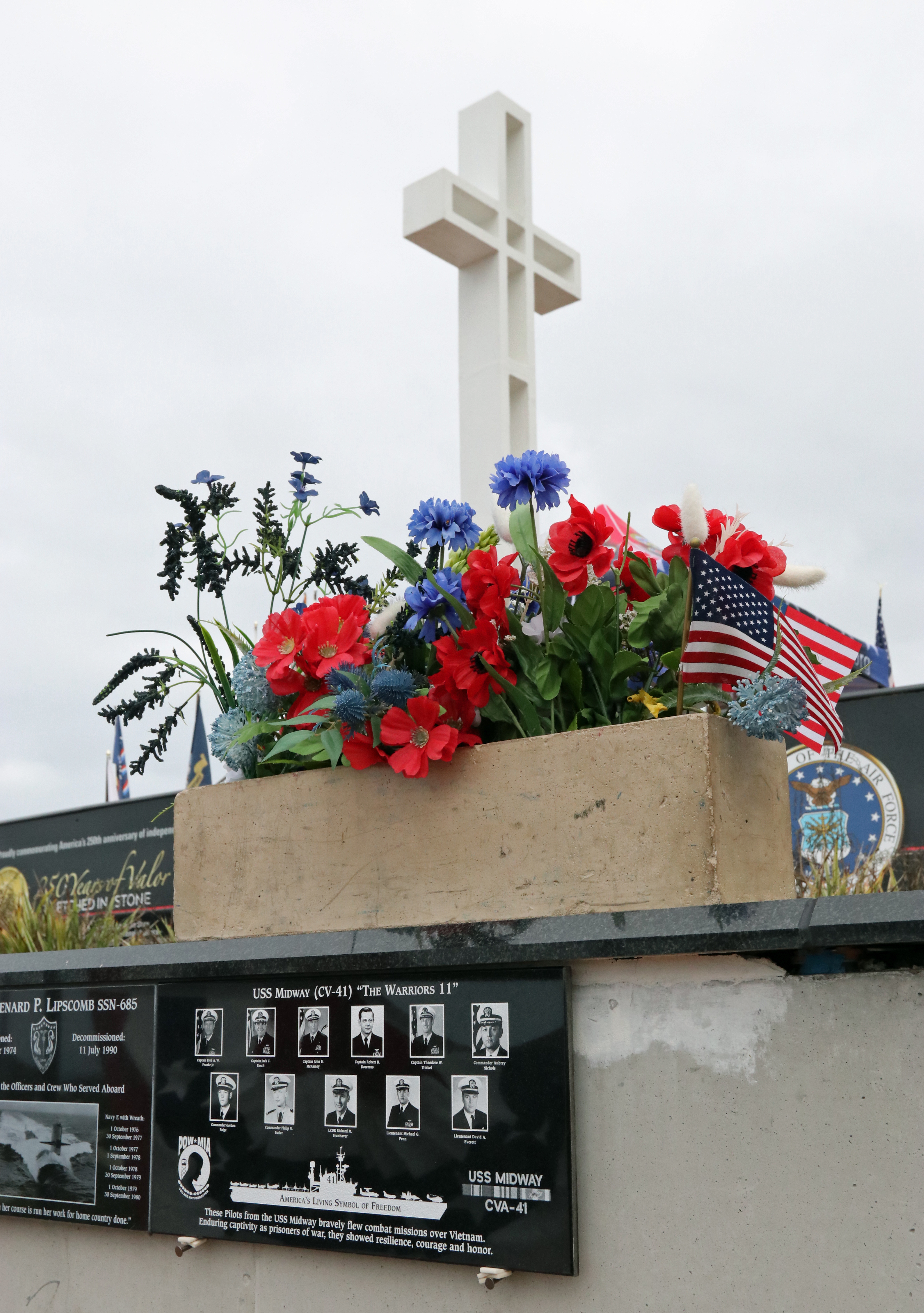
Their names join nearly 7,700 others on the memorial's black granite plaques — a living archive of the diverse men and women who have authored America's legacy of valor.
As we celebrate America 250, ceremonies like today's remind us that freedom is not an abstraction. It is a collection of individual stories — of men who flew into harm's way, endured the worst, and came home carrying the weight of what they'd seen.
The Warriors 11 carried that weight. And now, Mt. Soledad will carry their story.
Honor a Veteran at Mt. Soledad
The warriors we honored today remind us that every veteran's story deserves to be told — and preserved. A personalized plaque at Mt. Soledad National Veterans Memorial is one of the most powerful ways to ensure a veteran's legacy endures for generations to come.
Whether you are honoring a living veteran or memorializing a fallen hero, we invite you to be part of the living legacy of this memorial.
👉 Dedicate a plaque today at soledadmemorial.org/order-a-plaque
We don't just preserve names. We protect the American Story.


